‘Anxiety is caused by a lack of control, organisation, preparation and action’
– David Kekich
This will take you about five minutes, ten seconds to read. You can’t manage time – you can only manage yourself. This simple axiom is as true today as when I first heard it years ago. It speaks to truth. Like most of you, I have sometimes felt in the groove; focused and organised. At my best, I am productive and happy. At my worst, I have been as effective as a chocolate teapot; not useful, ineffective – yet strangely, more stressed. So, what was the difference?
Too many conferences and events over sell and under deliver. I am increasingly finding this unacceptable.
Only Another Seven Keynotes To Go Before Coffee…
Over the last twelve months I have attended a lot of marketing, digital and innovation themed conferences, seminars and industry events. A few were a great investment of my time and money. Some were disappointing – but free. Too many of them however were, universally awful. The worst offenders were more hype over substance and I felt ripped off paying for them as I gained nothing from the experience. Isn’t it time we deserved better, smarter and more productive business conferences, events and seminars? Continue reading “We Deserve Better Quality Business Events, Conferences & Seminars”
If marketers asked more beautiful marketing questions would we not create more beautiful marketing answers? What should those questions be? And why do we struggle to ask them? Part one of this two-part blog featured a review of Warren Berger’s excellent book ‘A More Beautiful Question’ where he explores the importance of questioning in innovation, creativity and entrepreneurship. In this second part I’m looking at how this approach can be applied specifically to marketing and the kind of questions that marketing leaders need to encourage to be asked more inside our organisations.
In many marketing and innovation environments there is a big lack of good questioning.
‘Why Don’t Companies Train People To Ask Questions?’ – Warren Berger
This is just one of the many great questions that Berger raises in this wonderful book that should be essential reading to anyone involved in product development, innovation or marketing performance. Linking to the themes from Berger’s main website – it explores the role and power of questioning in business, life – and everything. And just as important he examines why is it we seem too often to have forgotten the power of asking the really important questions – just when we need them more than ever? A More Beautiful Question is subtitled ‘the power of inquiry to spark breakthrough ideas’ – and of course in the vast realm of innovation literature, the role of inquiry and problem solving is a common theme. Curiosity (and some would argue friction and argument, as discussed in my interview with Gordon Torr in 2013) is the foundation of fresh ideas and solution. Continue reading “Book Review – A More Beautiful Question by Warren Berger. Part One.”
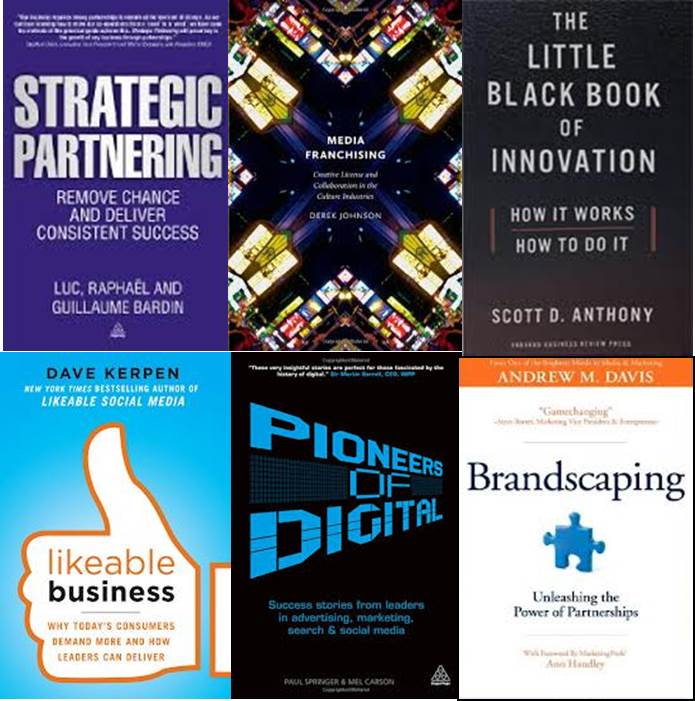
In the second of this two-part series I am reviewing three more excellent books; ‘The Little Black Book of Innovation’ by Scott D Anthony, ‘Likeable Social Media’ by Dave Kerpen and ‘Pioneers of Digital’ by Paul Springer and Mel Carson. Together they deliver some great answers to relevant questions, such as; What are the deadly sins of innovation? How should a brand develop digital content and engage with consumers in social media? And what kind of people helped create digital landmarks such as iTunes, Lastminute.com and TED? Read on to find our more. Or, alternatively go to Part One to see my reviews of ‘Strategic Partnering’ by Luc Bardin, ‘Brandscaping’ by Andrew M Davis and ‘Media Franchising’ by Derek Johnson by clicking right here…
In the first of this two-part series I am reviewing three recent books; ‘Strategic Partnering’ by Luc Bardin, ‘Brandscaping’ by Andrew M Davis and ‘Media Franchising’ by Derek Johnson.
and Six Books That Have Crossed My Desk Recently
I try to keep my radar tuned-in whilst trying to avoid too much of the noise. And for that reason there is still something essentially useful about a well structured book with quality content. My lecturing work at Tech Music School in Fulham and developing a paper on media industry collaboration for Henley Management School has seen me explore a number of interesting avenues from a range of great writers recently. From the latest thinking on strategic partnering and innovation to the lessons to be learnt from digital pioneers and brand & media franchising.
In the first of this two-part series I am reviewing; ‘Strategic Partnering’ by Luc Bardin, ‘Brandscaping’ by Andrew M Davis and ‘Media Franchising’ by Derek Johnson.
Collaborating, on the foundation of a bad idea, will not create the right outcome no matter how good the interaction between the players. And even with a good idea you need the right management and perhaps structure to nurture it.
“Today, reliability is no longer a key to competitive advantage. The organisations that will become the names of this century will be renowned for sustained, large-scale, efficient innovation.” – As Paul Adler wrote in Harvard Business Review in 2011;
No Shortage Of Encouragement To Innovate And Collaborate.
Everybody is a creative and everyone wants an innovative business. At least, that seems to be the case if you read any business magazine or scan the business shelf in the airport bookshop. Modern marketing leadership seems to be all about the ability to manage innovation. But are we mixing up the spark of creativity with the process of innovation? Recently I met with and interviewed Gordon Torr, the ex-global Creative Director of JWT to discuss how we define and work with creative people & innovation.
Seven Rules for Building More Effective Marketing Meetings, Seminars, Workshops and Conferences
Don’t Led The Wrong People Run Your Marketing Workshop
I recently published a guest post in the excellent TrinityP3 website (one of the world’s leading consultancies on agency management & marketing procurement) – where I examined what it is that makes for good and bad marketing meetings, workshops and seminars. You can read the full post – here. This is based in my experience over the years as both a participant and leader of such sessions – and my reflections on what works and what does not. My own work in developing MarketingCafe is very much a result of this understanding – and putting it into practice.
Below is a summary of the Seven Rules For Building An Effective Marketing Workshop –
Without Trust Good Relationships Are Difficult To Start
Now in its third year, the 2013 General Electric Innovation Barometer, a global survey of the barriers and drivers of innovation, once again reinforces the vital role of partnerships and collaboration to successful innovation. The Partnership Paradox remains too; innovation requires partnerships, many commentators extol their value, leaders and CEO’s desire them but most individuals and organisations struggle to build them. A lack of trust seems a constant reason why these valuable marketing relationships are often so hard to secure yet often so easy to lose.